Stephen Curry's Torn Oblique: What His Two-Week Absence Means for the Warriors
Stephen Curry's Torn Oblique: What His Two-Week Absence Means for the Warriors
November 12, 2026 — Stephen Curry will be reevaluated in two weeks after an MRI confirmed a torn oblique muscle, the Golden State Warriors announced Thursday. The reevaluation is not a guaranteed return date. It means the Warriors must prepare to play without their defining perimeter scorer while his recovery is assessed.
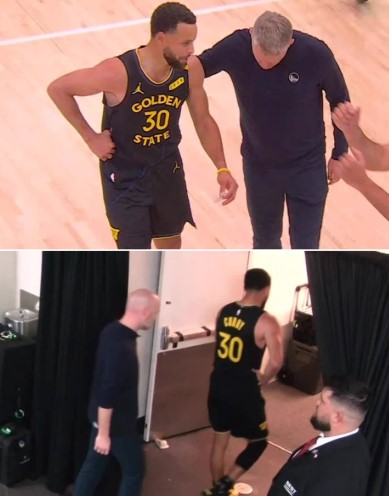
Curry exited Wednesday's loss to Houston after approximately five and a half minutes, visibly favoring his right side. That defeat ended Golden State's eight-game winning streak. According to the Associated Press, coach Steve Kerr described his level of concern as high.
Why this injury matters now
Curry was averaging 27.8 points in 10 appearances, while shooting 45.7% from three-point range before the interruption. Those numbers illustrate his offensive importance, though a ten-game shooting percentage should not be treated as a sustainable full-season projection. The Warriors stood at 8–4, including 1–2 in games Curry missed or exited early, according to the AP. That small split is not a causal estimate of his value: opponent strength and other roster circumstances also matter.
The more consequential question is how the Warriors replace the attention Curry commands. His off-ball movement and deep shooting range routinely pull defenders away from the paint and create passing and cutting opportunities for teammates. Removing that gravity may force Golden State to create more possessions through secondary ball-handlers, deliberate screening and individual shot creation.
Those are analytical possibilities, not announced coaching decisions. The next games will reveal how much offensive efficiency the Warriors can preserve without their primary spacing threat.
What changes on the floor?
Replacing 27.8 points of individual scoring is not as simple as distributing extra attempts among teammates. Curry's range stretches defensive coverage even when he does not touch the ball. Opponents may be able to help more aggressively against drives and interior actions, and the Warriors may have to work deeper into the shot clock for comparable looks.
Useful indicators will include assisted baskets, turnover frequency, three-point shot quality and half-court execution. A raw scoring average alone will not explain whether Golden State has found a sustainable alternative. Defensive stops and transition offense could also become more important if set-play scoring becomes less efficient.
The two-week timeline is a checkpoint, not clearance
The Associated Press reported Curry would miss at least six games, starting Friday at San Antonio. A two-week medical reevaluation does not establish when he will resume contact work or game action. The injury's healing and Curry's subsequent medical status must determine the timetable.
Golden State's immediate task is to protect its record without making assumptions about a specific return game. Wednesday's early exit showed how abruptly an intended rotation can change.
What to watch next
First, watch how Golden State redistributes possessions and ball-handling responsibilities. Second, evaluate whether its spacing and assisted-shot profile deteriorate without Curry's movement. Third, wait for the next official medical update before assigning a return date.
The verified development is narrow but significant: Curry has an MRI-confirmed oblique tear and will be reevaluated in two weeks. His availability beyond that checkpoint remains uncertain.
Source
Associated Press, November 12, 2026, Warriors star Stephen Curry suffers torn oblique muscle and will be sidelined at least two weeks.
Run your next bet through Statr
Find the next play, check the risk, and back it with stats — before you place it.